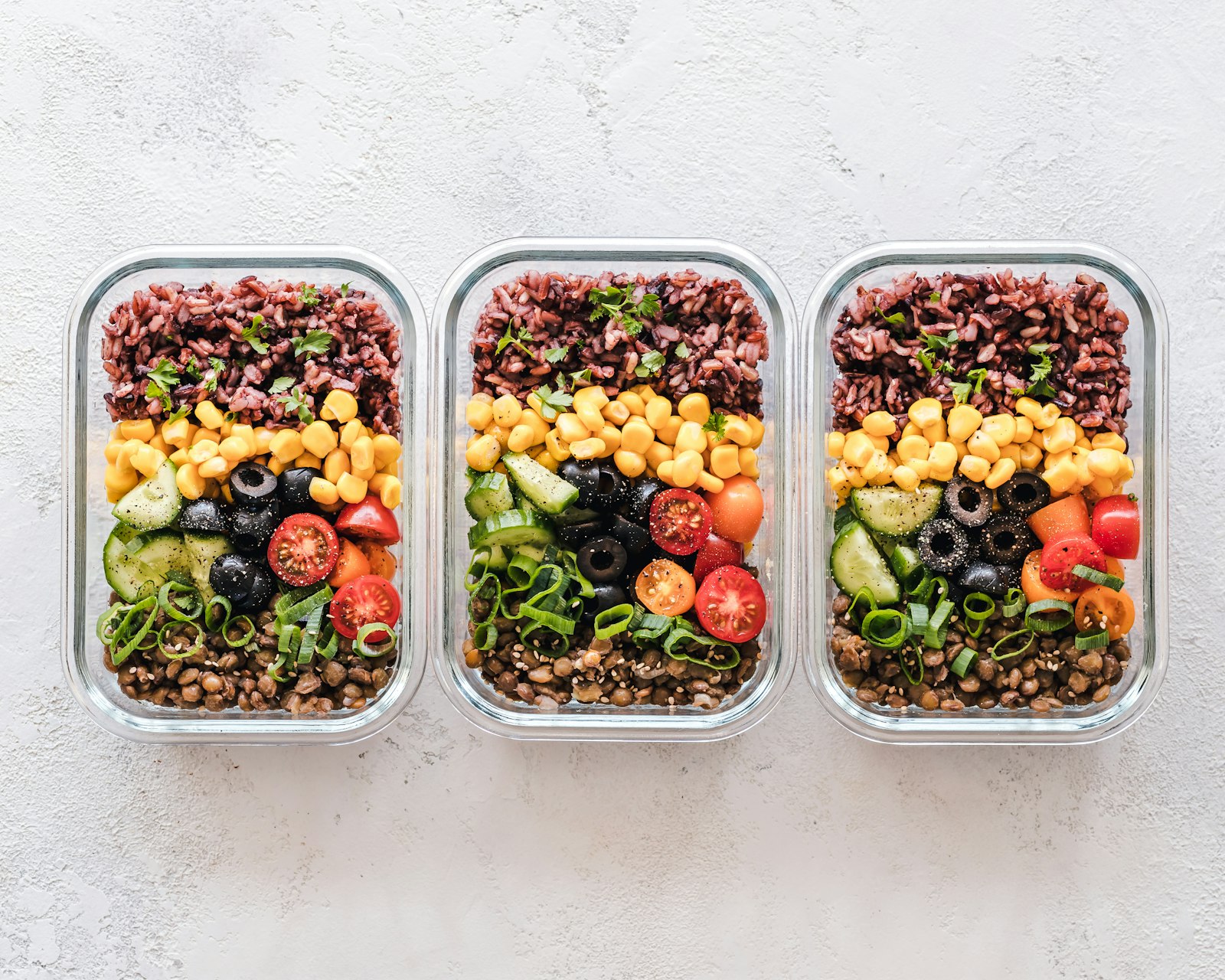
Cooking several days of meals in one go saves time and money, but it comes with a catch: by the third day everything tastes the same. The fix isn’t to cook more dishes, but to cook two bases well and change what goes with them.
Two bases, many combinations
Pick one protein and one grain or legume that you cook in bulk. For example, roast chicken and rice. With that base, change the sauce, the vegetables or the dressing each day:
- Chicken with yogurt and cucumber sauce.
- Chicken with roasted pepper and caramelized onion.
- Chicken with soy sauce, ginger and sesame.
Organize the week in three steps
- Cook the bases on prep day, in a single session.
- Make two or three sauces that keep in the fridge and give the same base a different flavor.
- Portion the meals into containers and label them with the date.
Store food safely
Cooked food keeps in the fridge for three to four days, according to the USDA (rice is an exception: see below). If you won’t eat it within that time, freeze the portions and thaw them in the fridge the night before. Reheat until piping hot all the way through.
Cooking two bases well and changing the sauce is more practical than cooking five different dishes.
Storage guidance comes from the USDA and may vary by type of food. Check your country’s guidelines if in doubt.
A prep session, step by step
- Shop from a list. One protein (or a protein and a legume), one grain and three vegetables. The basic grocery list tells you how much per person.
- Start with what takes longest. Turn on the oven and put the rice or legumes on, and chop the vegetables while they cook.
- Make the sauces while the oven works. Two or three are enough to make the same base feel like a different meal.
- Cool food fast. Divide hot food into shallow containers and put it in the fridge within two hours of cooking; a big pot takes a long time to cool in the middle.
- Label with the date and keep sauces and crunchy toppings separate to add when you serve.
Rice is a special case
Cooked rice needs more care than other leftovers. The UK Food Standards Agency (FSA) recommends cooling it as quickly as possible, ideally within an hour, in small portions and not left in the pot or rice cooker; keeping it in the fridge for no more than one day before reheating, and reheating it only once until it is steaming hot all the way through. The reason is that spores of a bacterium found in raw rice (Bacillus cereus) survive cooking, and the longer cooked rice sits at room temperature, the more likely they are to produce toxins. If you prepare it for several days, freeze the portions within an hour of cooking and thaw them in the fridge.
What freezes well and what does not
- Usually freeze well: stews, soups, cooked legumes, sauces and cooked meats, in portions.
- Lose texture: leafy and raw vegetables, boiled potatoes, and sauces made with yogurt or cream, which can split when reheated.
- Thaw in the fridge the night before and, if you reheat a sauce or broth, bring it to a gentle boil so it is hot all the way through.
How to really avoid boredom
- Change the format: the same base in a bowl, a wrap, a warm salad or a soup.
- Change what you add at the end: nuts, seeds, fresh herbs, a lemon or a few drops of hot sauce.
- Change the temperature: roasted vegetables one day, raw and dressed the next.
- Keep one fresh meal mid-week: an egg, a can or a quick salad breaks the monotony better than yet another sauce.
From the kitchen · 7 years on the jobA can of tuna, a can of legumes or simply mushrooms can satisfy your appetite without being greasy. It’s a cook’s fallback when time is short.
Sources and review
- U.S. Department of Agriculture (USDA/FSIS): Leftovers and Food Safety
- USDA/FSIS: Freezing and Food Safety
- Food Standards Agency (UK): Home food fact checker (rice: cool as quickly as possible, ideally within an hour; fridge for no more than one day; reheat only once until steaming hot)
Last reviewed: October 18, 2026. If you spot a mistake, write to us from the contact page.