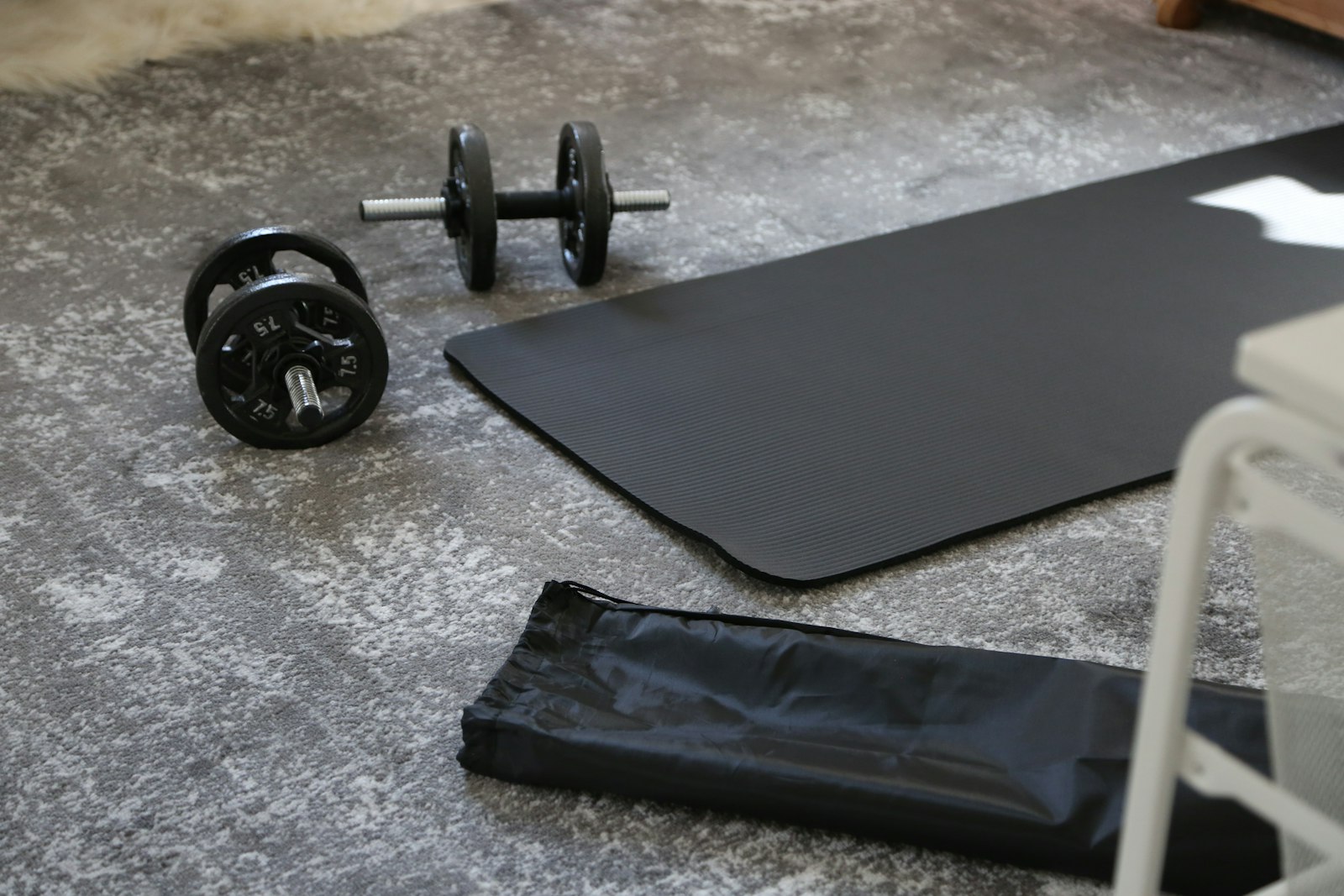
You don’t need a gym to train strength. With your own body weight you can work your legs, chest, back and abs in half an hour. What matters is consistency and good technique.
What the guidelines say
The World Health Organization recommends that adults do muscle-strengthening activities on two or more days a week, at moderate or greater intensity and working all the major muscle groups, in addition to aerobic activity. This routine covers that minimum in a simple way.
The routine
Do three rounds with one minute of rest between exercises. Start with repetitions you can do with good technique and build up gradually.
- Squats: lower yourself keeping your back straight and your knees in line with your feet.
- Push-ups: if they’re hard, rest on your knees or on a raised surface.
- Lunges: alternate legs, keeping your torso upright.
- Glute bridge: lift your hips, squeezing your glutes at the top.
- Plank: keep your body in a straight line from head to heels for a few seconds.
Tips to avoid injury
- Warm up for about five minutes first: easy marching and shoulder and hip mobility.
- If you feel sharp pain, stop. Muscle burn is normal; joint pain is not.
- If you have an injury or a health condition, check with a professional before starting.
Three half-hour sessions a week count for more than one long session that never repeats.
The physical activity recommendation comes from the WHO. This text is general guidance and does not replace the advice of a health professional or a certified trainer.
How to know it is time to make it harder
When you can do one or two more repetitions than you planned in every round, it is time to raise the difficulty. The American College of Sports Medicine (ACSM) puts it this way: increase the load when you can perform the current workload for one or two extra repetitions. Without weights, you change the load by changing the exercise:
- Squats: lower slowly, pause for two seconds at the bottom, or move to one leg with the other foot resting on a chair behind you.
- Push-ups: on your knees or with your hands on a high surface; then standard; then with your feet elevated.
- Lunges: add a backpack with some weight or do them walking.
- Glute bridge: move to a single leg.
- Plank: hold it longer or lift one arm at a time.
A five-minute warm-up
- Marching in place for one minute to raise your temperature.
- Shoulder and hip circles, about ten per side.
- Eight or ten slow squats, with no rush and no pause.
- Thirty seconds of plank or cat-cow, whichever feels better.
Common technique mistakes
- Squat: knees caving in, heels lifting or a rounded back. Reduce the range, widen your stance a little and reach your arms forward to balance.
- Push-up: hips sagging or too high, and elbows flared all the way out. Keep your body in a line and your elbows somewhat close to your torso.
- Plank: a sagging lower back and held breath. Brace your abs and breathe calmly; if your lower back sags, stop and rest.
- In all of them: doing the repetitions too fast. Control the way down.
How much to rest between sessions
With three days a week, leave at least one day between sessions so the same muscles can recover (for example, Monday, Wednesday and Friday). For beginners, the ACSM recommends strength training two to three days a week.
When you want something more tailored
If you prefer a routine with more exercises, sets and rest times adjusted to your level and the equipment you have, try the routine generator. And if you want to know how much energy you need each day to support your training, use the calorie calculator.
From the kitchen · 7 years on the jobDon’t get discouraged by what you see on social media: we all start somewhere.
From the kitchen · 7 years on the jobMy week, in case it helps as a reference: I train six days, one hour a day. Monday chest and triceps; Tuesday shoulders and back; Wednesday legs; Thursday lower back and abs; Friday heavier chest; Saturday cardio with legs. It’s not a guideline for everyone: start with what you can sustain.
Sources and review
- World Health Organization: Physical activity and WHO guidelines on physical activity and sedentary behaviour
- Bull FC et al.: World Health Organization 2020 guidelines on physical activity and sedentary behaviour (Br J Sports Med 2020; 54:1451-1462): muscle-strengthening at moderate or greater intensity, all major muscle groups, on 2 or more days a week
- American College of Sports Medicine: Progression models in resistance training for healthy adults (Med Sci Sports Exerc 2009): beginners train strength 2 to 3 days a week; load goes up when one or two extra repetitions are possible
Last reviewed: October 18, 2026. If you spot a mistake, write to us from the contact page.