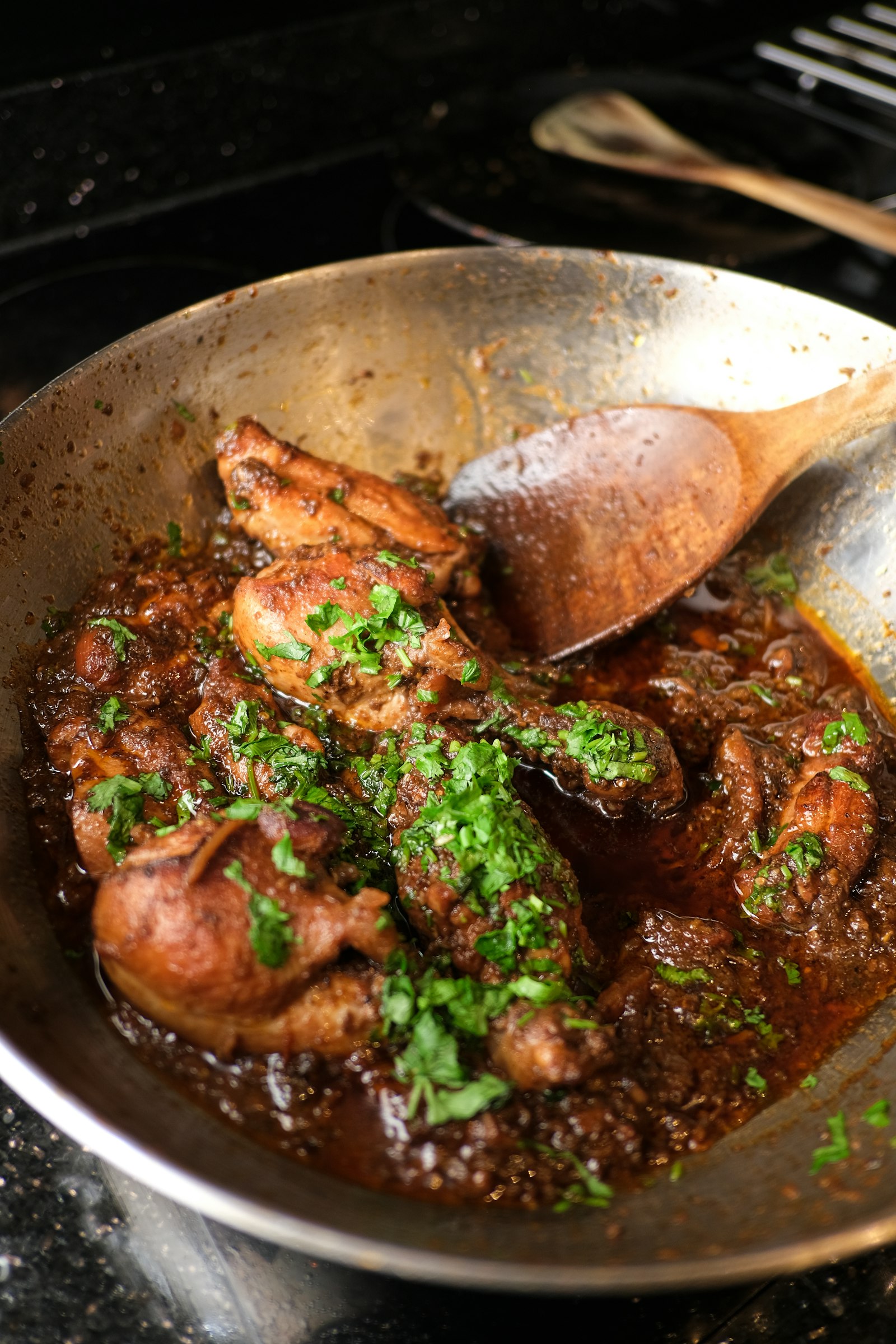
Dry chicken usually has the same cause: it is cooked in a hurry, at the wrong heat and without resting. With four simple steps you get a golden surface and a juicy inside, in both breast and thigh.
Before you start
- Dry it well. With paper towels, remove all the moisture from the surface. Wet food steams instead of browning.
- Even out the thickness. If the breast is very thick, flatten it a little with your hand or a rolling pin so it cooks evenly.
- Season ahead. Salt and pepper a few minutes before cooking, or right before if you’re in a hurry.
How to cook it
- Heat the pan over medium-high heat with a little oil. It should be hot, but not smoking.
- Add the chicken and don’t move it for about four or five minutes. If you move it too soon, the golden crust doesn’t form.
- Flip it and lower the heat a little. Cook until done in the middle.
- Let it rest for five minutes before cutting. That way the juices spread out instead of running onto the board.
How to know it’s done
The most reliable method is a kitchen thermometer: the center of the chicken should reach 165 °F (74 °C), according to the minimum safe internal temperature chart of the U.S. Department of Agriculture (USDA), which sets 165 °F for poultry. If you don’t have a thermometer, cut into the thickest part: it should not be pink or have reddish juices.
Hurry is chicken’s enemy: not moving it and letting it rest do more than any sauce.
The temperature is the one the USDA recommends for poultry (165 °F, about 74 °C). Check your country’s food safety guidelines.
From the kitchen · 7 years on the jobI taste each thing separately, one by one, before putting them together: that’s how I know what’s missing. And in the pan I use a heat-resistant plastic spatula that won’t melt.
Sources and review
- USDA/FSIS: Safe Minimum Internal Temperature Chart (poultry: 165 °F, about 74 °C)
Last reviewed: October 13, 2026. If you spot a mistake, write to us from the contact page.