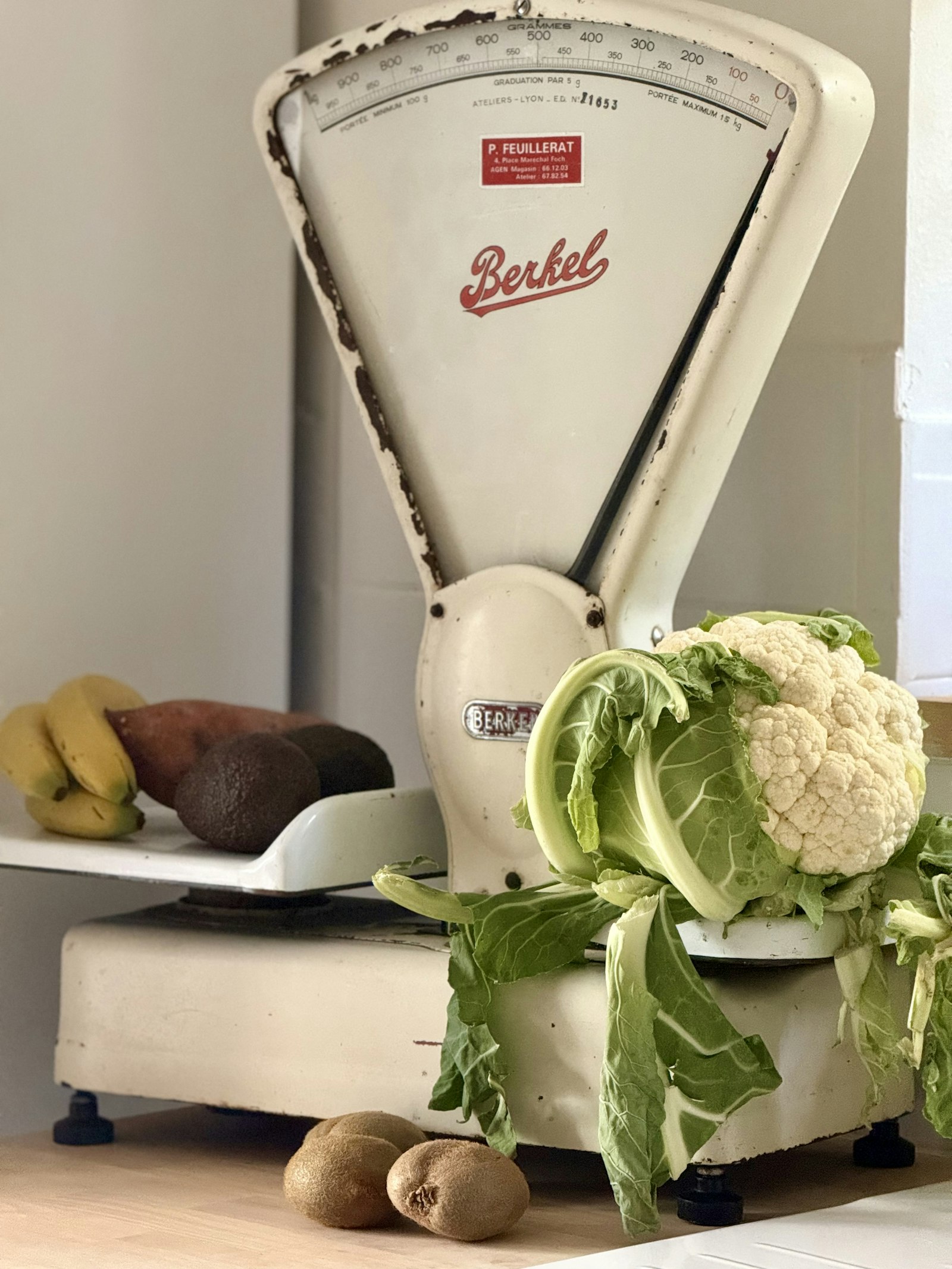
Professional cooks know what each dish costs before serving it. That calculation is called costing (escandallo in Spanish kitchens) and you can do it at home on a sheet of paper: it tells you how much you really spend and where you can save without eating worse.
What costing is
It’s the cost of a recipe, ingredient by ingredient, divided by the number of servings it makes. You don’t need to log the price of every pinch of salt: with the ingredients that weigh on the cost (protein, legumes, vegetables, oil) you get a reliable figure.
The formula in three steps
- Unit price. Divide what you paid by the package size (for example, 2 ÷ 1,000 g).
- Cost of what you use. Multiply that price by the amount used and correct for trim loss: amount used ÷ (1 − loss).
- Add up and divide. Add all the ingredients and divide by the number of servings.
Trim loss: what never reaches the plate
From a kilo of product you don’t eat the whole kilo: skin, bones, spines, outer leaves. That part is trim loss (merma), and it makes the dish more expensive even if you can’t see it on the receipt. To measure it, weigh before and after cleaning: (starting weight − clean weight) ÷ starting weight. With fish or leafy greens it can be large, and improving your cutting technique reduces it.
Example with made-up numbers
The prices below are invented just to show the formula. Use your own.
| Ingredient | Price | Package | Used | Loss | Cost |
|---|---|---|---|---|---|
| Dried lentils | 2.00 | 1,000 g | 280 g | 0% | 0.56 |
| Vegetables (carrot and onion) | 1.50 | 1,000 g | 300 g | 15% | 0.53 |
| Oil | 8.00 | 1,000 ml | 20 ml | 0% | 0.16 |
| Total (4 servings) | 1.25 → 0.31 per serving |
Run the calculation with your own prices in the costing calculator: it saves your ingredients in this browser so you don’t have to re-enter them.
Reference servings
To know how much of each thing to use, the SENC portion table (2004), published by the Spanish Ministry of Health, gives weights always raw and net:
| Group | Weight per serving (raw, net) | Reference frequency |
|---|---|---|
| Rice and pasta | 60–80 g | Cereals and potatoes group: 4–6 servings a day |
| Legumes | 60–80 g | 2–4 a week |
| Fish | 125–150 g | 3–4 a week |
| Lean meat and poultry | 100–125 g | 3–4 a week, alternating with eggs |
| Vegetables | 150–200 g | 2 or more a day |
| Fruit | 120–200 g | 3 or more a day |
| Potatoes | 150–200 g | Within the cereals group |
Where the money really goes
- In what gets thrown away. According to the UN (2024), about 1.05 billion tonnes of food were wasted in 2022 and 60% of it happened in households.
- In shopping without a plan. What has no destination spoils.
- In badly measured servings. Cooking too much, without weighing, means spending too much.
How to lower the cost without eating worse
- Compare by price per kilo.
- Make the weekly plan your shopping list.
- Freeze portions: the USDA says 3–4 days in the fridge or 3–4 months frozen.
- Lean on legumes, rice and seasonal vegetables.
- Weigh before and after cleaning: trim loss tells you what’s worth it.
From the kitchen · 7 years on the jobMy biggest improvement was learning to cut fish a different way: I used to waste a lot, and it dropped when I changed the way and the technique. That’s trim loss, and it shows up in the cost.
Sources and review
- Spanish Ministry of Health (SENC portion table, 2004): Portion weights by food group
- UN Environment Programme: Food Waste Index Report 2024
- U.S. Department of Agriculture (USDA/FSIS): Leftovers and Food Safety
Last reviewed: October 13, 2026. Weights and frequencies come from a 2004 reference table; they are indicative, not individual guidance. If you spot a mistake, write to us from the contact page.